Around 43% of all households in the United States have at least one gun according to the statistics. As a result, people in the U.S. own 46% of the guns in the entire world. Just think about it – the U.S. has 120.5 guns per 100 people in the United States, so you’re very likely to bump into a gun owner anywhere. Most people own guns for protection, but many own them for hunting or sport shooting – in which case a scope is a must if you want to shoot accurately.
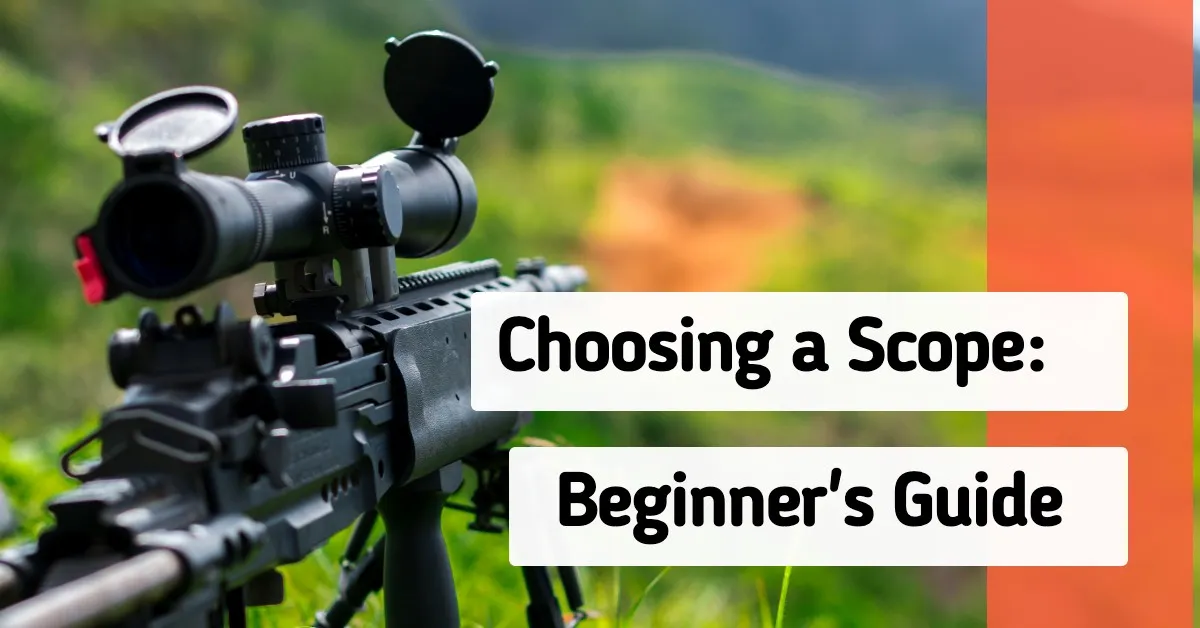
Beginners don’t find it that easy to select a scope, though. It’s normal – you’ve just joined the gun world, and you’re probably scared of possibly doing something wrong. But choosing a scope doesn’t have to be any beginner’s nightmare. To make sure you are confident when picking your new scope, we prepared this guide that will help you find the right item.
What Are You Going to Use the Scope For?
Before you start looking around for the right scope, you should determine why you will need it. What type of shooting are you going to perform? Are you going to hunt or target shoot? The type of shooting will allow you to estimate the proper size of your scope, as well as the capacity.
Depending on what you are hunting, you will need a specific optic type that can shoot at the distance, such as when you’re hunting small game at 500 yards. On the other hand, you can also be target shooting and still need an optic that lets you shoot at a greater distance if you’re a more advanced shooter. But your scope may also require seasoned vermin controllers and other features that allow you to see the target.
With that being said, determine why you want a scope before you look at other details. This way, you will know what to do in the next part of the process.
Picking the Right Magnification Level
This next step is where people are usually messing up. The magnification level on your rifle scope will be one of the critical parts that aid you in shooting. If you have the right level, then you’ll be able to see the target. However, if the magnification is too low or too high, then you might not shoot accurately and miss the mark.
But there are more things to take into account when it comes to magnification. While having the minimum magnification level is what gives you a clear view of the target, you need to think of the other two factors. You have to consider whether you’re long or short-range shooting and whether the target is still or moving.
Magnification refers to how much closer you can see the target compared to the naked eye. So, a 3X magnification means that you’d be able to see three times closer than the naked eye.
Some scopes have fixed magnification, in which case you need to make sure you’re getting the right one. On the other hand, there are scopes with adjustable magnification, allowing you to get the desired magnification level. While variable scopes have a wider range of magnification options, a fixed one usually has higher quality, is faster, and is cheaper too.
The level of magnification should be between 1 – 4X if you need it for home defense or for hunting small game. If you hunt in large game mountains or forests, going for a 5 – 8X magnification is the right move, whereas if you hunt in deserts or fields, you should consider a 9 – 12X magnification.
Meanwhile, if you’re shooting a moving target, you shouldn’t go with too much magnification because the higher the level, the smaller the field of view is going to be. Conversely, you can go with a high magnification level scope if you’re shooting a still target.
Settle for the Correct Scope Reticle
There are multiple types of scope reticles, and each one of them will be suitable for a specific type of shooting. The reticle is the crosshair, and it will help a lot depending on the particular situation you’re in. For target or hunter shooters, a Duplex reticle is the fastest and easiest to use. Long-range shooters will need something more advanced, like a BDC reticle. Lastly, in life or death situations, mil dot reticles will be the right ones to use.
Consider the Scope’s Coating
Another thing you should look at is the scope lens coating. There are different types of coatings to look at, and you should go with one that is convenient for you. The majority of scopes you find today are fully multi-coated, but that doesn’t mean you cannot stumble upon the other types as well.
Coated scopes have at least one area of the scope covered in one layer. This is the cheapest option available for people with a small budget. Fully coated scopes have all their external glass surfaces covered in a single layer. Then, you have multi-coated scopes that have at least one surface covered in multiple layers. Lastly, fully multi-coated layers are the ones that cover all the external surfaces of the scope in multiple layers. The last option is the best one.
Don’t Overlook Eye Relief
Eye relief is more important than you think. If you don’t want to wear an eye patch after each shooting session and have people believe you are cosplaying a pirate in your free time, you better consider the eye relief.
Eye relief is the distance between the lens you’re looking through and the eye. When you have a high recoil gun, you need more eye relief. Lower recoil needs less eye relief. Make sure you choose wisely.
Final Thoughts
Picking the right scope shouldn’t be a burdensome process. You have to be careful about certain factors and aspects and choose according to your needs. We hope this guide will help you end up with the right rifle scope.