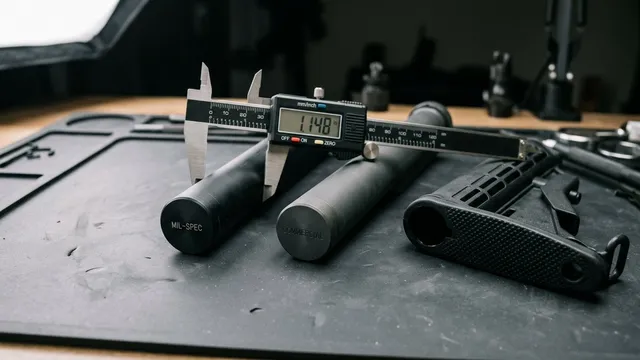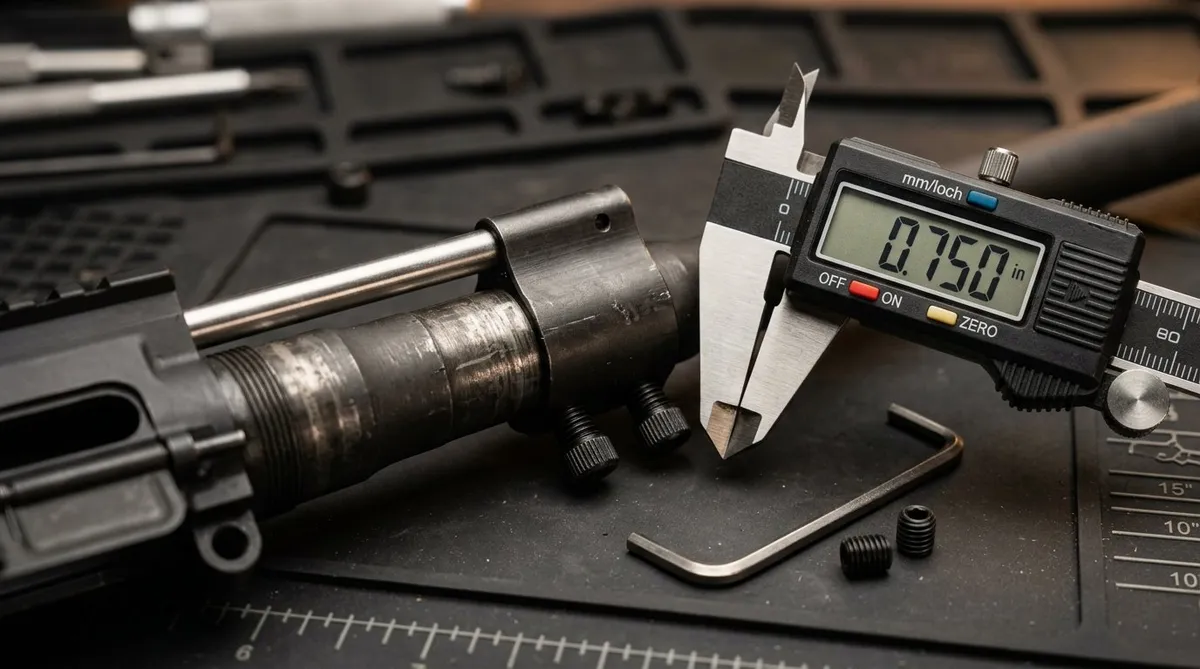
Short answer: the gas block must match the diameter of your barrel's gas block journal. 0.750 inch is by far the most common (government, M4 and medium profiles). Pencil and lightweight barrels use 0.625; many heavy and AR-10 barrels use 0.875 or 0.936. The barrel's listing gives the size, or measure the journal with calipers.
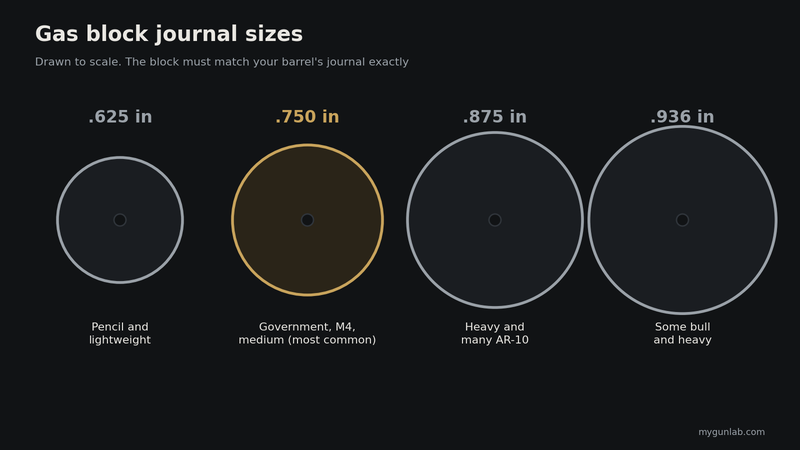
Gas block sizes and the barrels that use them
| Journal size | Typical barrels | Shop |
|---|---|---|
| 0.625 in | Pencil and lightweight profiles | .625 gas blocks |
| 0.750 in | Government, M4 and medium profiles (most AR-15 barrels) | .750 gas blocks |
| 0.875 in | Heavy profiles and many AR-10 barrels | .875 gas blocks |
| 0.936 in | Some bull and heavy barrels | Check the barrel listing |
Choosing a gas block
- Low-profile blocks fit under free-float handguards; a front sight base needs a handguard that ends behind it.
- Adjustable blocks let you turn the gas down, which helps with a suppressor or an overgassed rifle.
- Mounting: pinned blocks are the most secure, clamp-on blocks hold well without dimpling the barrel, and set-screw blocks are fine with dimples and high-temperature thread locker.
Parts that fit
Shop .750 gas blocks, .625 gas blocks, .875 gas blocks or all gas system parts. The AR-15 builder flags a gas block that doesn't match your barrel's journal.
Frequently asked questions
What is the most common AR-15 gas block size?
0.750 inch. Government, M4 and medium-profile barrels, which covers most AR-15 barrels, use it.
How do I measure my gas block journal?
Measure the barrel where the gas block sits with calipers: about 0.625, 0.750, 0.875 or 0.936 inch.
Will a .750 gas block fit a .625 barrel?
No. The block must match the journal exactly, or it leaks gas and the rifle won't cycle.
Do I need an adjustable gas block?
Only if you shoot suppressed or the rifle is overgassed. For a standard build a fixed block is simpler.