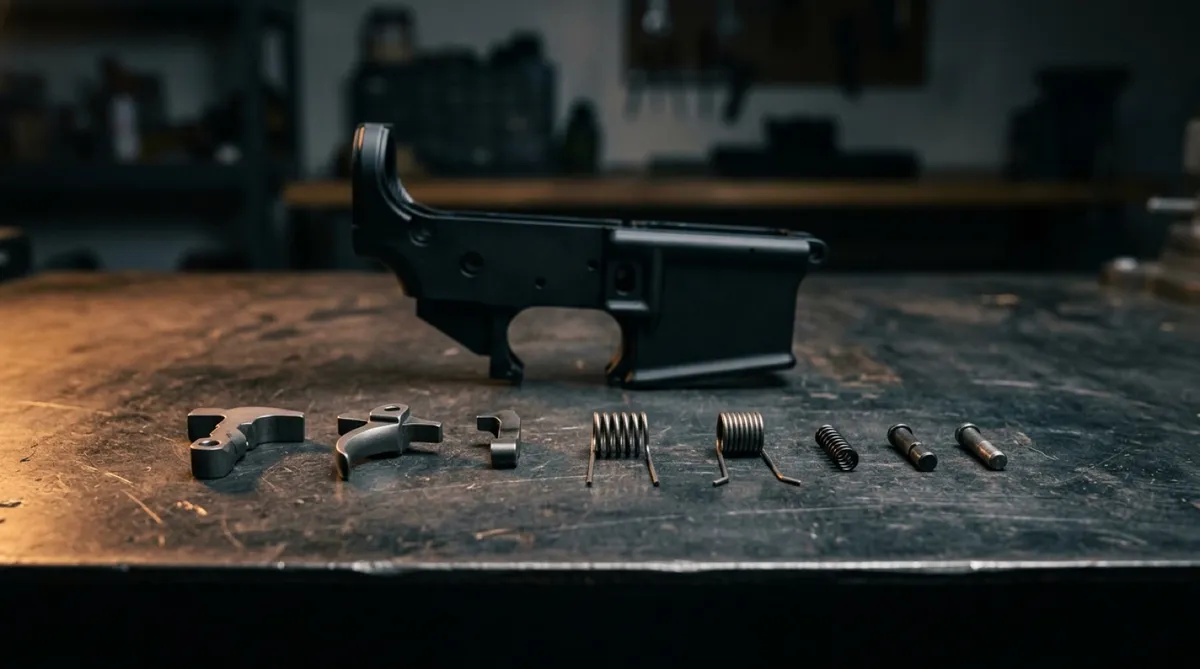
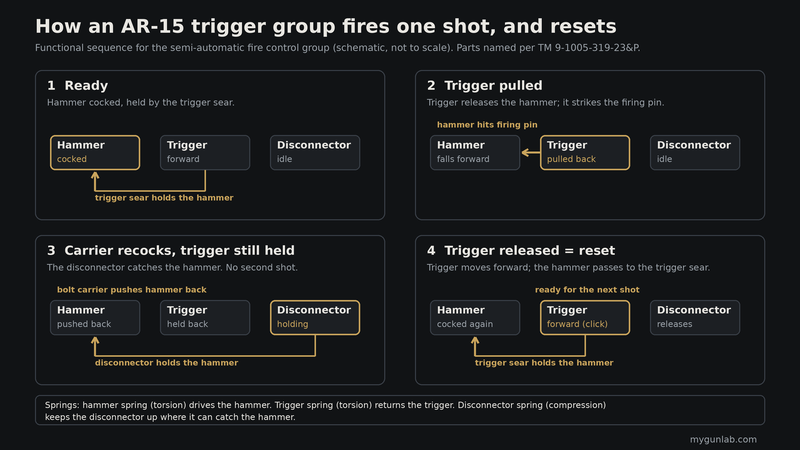
Short answer: an AR-15 trigger group is three moving parts and three springs. Pulling the trigger releases the hammer, which strikes the firing pin. The bolt carrier then pushes the hammer back, and if you are still holding the trigger the disconnector catches it, so the rifle cannot fire again. When you let the trigger forward, that is the reset: the hammer passes from the disconnector to the trigger's sear and the rifle is ready for the next shot. That is why one pull gives one shot. This guide covers the semi-automatic fire control group.
The parts of an AR-15 fire control group
| Part | What it does | Spring |
|---|---|---|
| Hammer | Strikes the firing pin. Has two catches cut into it: one the trigger holds, one the disconnector catches. | Hammer spring (torsion) |
| Trigger | Holds the cocked hammer with its sear and releases it when pulled. | Trigger spring (torsion) |
| Disconnector | Catches the hammer while the trigger is held back; lets it go when the trigger comes forward. | Disconnector spring (compression) |
| Trigger pin and hammer pin | The two pivots the trigger (with the disconnector) and the hammer turn on. | None |
| Selector (safety) | On SAFE it blocks the trigger so the hammer cannot fall. | Detent spring |
What happens when you fire
- Ready. The hammer is cocked and held by the trigger's sear.
- You pull the trigger. It releases the hammer, which swings forward and strikes the firing pin. The Army's manual puts it simply: squeezing the trigger releases the hammer, the hammer strikes the firing pin, and gas from the shot cycles the action.
- The carrier recocks the hammer. As the bolt carrier moves back it pushes the hammer down and back. If your finger is still on the trigger, the disconnector catches the hammer instead of the trigger. The hammer cannot fall, so there is no second shot.
- You release the trigger: reset. As the trigger moves forward the hammer passes from the disconnector to the trigger's sear. You hear or feel a click. The rifle is ready for the next pull.
What is trigger reset?
People use the word two ways. Mechanical reset is the hand-off above: the trigger has to come forward far enough for the sear to catch the hammer again. The Army's function check has you release the trigger slowly until it is fully forward and you hear a click. Reset distance is how far you must let the trigger out before you can fire again, and it is what shooters mean by a "short" or "tactical" reset. Aftermarket triggers differ in feel and reset; compare them in our trigger comparison.
How to check your trigger works
With the rifle unloaded and the muzzle in a safe direction, do the two checks Geissele uses on its own triggers:
- Safety check. Cock the hammer, set the selector to SAFE and pull the trigger hard. The hammer must not fall.
- Reset check. Set the selector to FIRE, dry fire and keep the trigger held back. Pull the charging handle fully back and let the carrier go forward. The hammer must not fall. Now release the trigger: the hammer should be caught by the trigger.
A drop of lubricant helps. Geissele's instructions list the disconnector face, the sears on the hammer and trigger, the hammer tail where it meets the disconnector, and the tops of the hammer spring.
Troubleshooting: doubling and no reset
| Symptom | Likely cause |
|---|---|
| Fires twice per pull in semi (doubling) | Worn or defective disconnector; worn hammer notch where the trigger sear holds it; worn hammer notch where the disconnector catches it (Army TM 9-1005-319-23&P). |
| Hammer will not stay cocked | Worn trigger nose or weak trigger spring; worn hammer notches; worn disconnector hooks or springs (same Army troubleshooting table). |
| No reset after installing a new trigger | Disconnector spring upside down, or the hammer spring legs under the trigger pin (see our install guide). |
| Trigger will not return | Trigger spring facing backwards (see our install guide). |
Our trigger install guide shows how the parts go in and why spring orientation matters, and how to assemble a lower covers the rest of the lower.
Aftermarket triggers: same job, different feel
A drop-in or two-stage trigger does the same hand-off with different parts and geometry: a lighter or cleaner pull, a firmer wall, a different reset. Browse AR-15 triggers by price, read our trigger picks, or add one to your build in the AR-15 builder. One of each style, with today's prices:
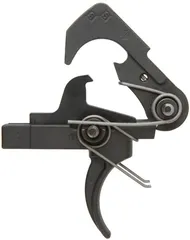
ALG Defense QMS mil-spec trigger
Pros
- Mil-spec style, separate parts
- Lowest price here
Cons
- Mil-spec feel, not a precision pull
Mil-spec style
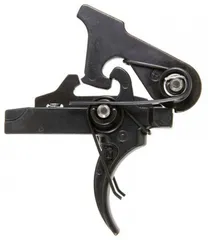
Geissele G2S two-stage
Pros
- Two-stage with a distinct wall
- Widely used upgrade
Cons
- Costs more than a standard group
Two-stage
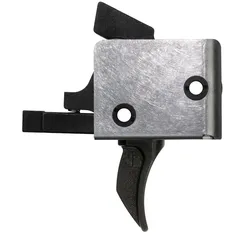
CMC single-stage drop-in
Pros
- Drop-in cartridge: easy install
- 2.5 lb pull
Cons
- Light pull needs care
Single-stage drop-in
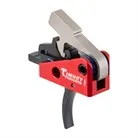
Timney Targa two-stage drop-in
Pros
- Drop-in two-stage
- Self-contained housing
Cons
- Pricier than a standard group
Drop-in two-stage
Wondering how a forced reset trigger differs? See forced reset triggers explained.
Frequently asked questions
What does the disconnector do in an AR-15?
It catches the hammer after each shot while you hold the trigger back, so the hammer cannot fall again until you release the trigger. That is what makes the rifle semi-automatic.
What is trigger reset?
The point at which the trigger has moved forward far enough for the sear to catch the hammer, ready for the next shot. You usually hear a click. Shooters also use "reset" for how far they let the trigger out.
Why does my AR-15 double fire or not reset?
Usually a worn disconnector or hammer notch, or a spring problem: a disconnector spring installed upside down, hammer spring legs under the trigger pin, or a trigger spring facing backwards.
What springs are in an AR-15 trigger group?
Three: a torsion hammer spring, a torsion trigger spring and a compression disconnector spring, per the Army's part names. The selector has its own small detent spring.
How do I test an AR-15 trigger?
Unloaded and pointed safely, check that the hammer will not fall on SAFE, then hold the trigger back, cycle the carrier by hand and confirm the hammer is held until you release the trigger.
Do drop-in triggers work the same way?
Yes. They use the same hammer, trigger and disconnector hand-off, in a self-contained housing.