Short answer: a mil-spec barrel nut takes 30 ft-lb, then up to 80 ft-lb to line up the gas tube hole. The castle nut takes about 35 to 40 ft-lb and should be staked. A muzzle device on a crush washer takes 15 to 20 ft-lb. Gas key screws take 50 to 58 in-lb (inch-pounds, not foot-pounds). For free-float handguards, gas blocks and optic mounts, use the maker's own spec.
AR-15 torque chart
| Part | Torque | Notes |
|---|---|---|
| Barrel nut (mil-spec, delta ring) | 30 ft-lb, up to 80 ft-lb | Tighten in stages until a slot lines up with the gas tube hole. No thread locker |
| Barrel nut (free-float handguard) | Maker's spec | Each handguard maker gives its own value |
| Castle nut (buffer tube) | 35-40 ft-lb | The Army manual gives 38-42 ft-lb for the carbine. Stake it |
| Muzzle device (crush washer) | 15-20 ft-lb | Time the ports; shims or peel washers per the maker |
| Gas key screws | 50-58 in-lb | Then stake both screws (usually done by the BCG maker) |
| Gas block set screws | About 25-35 in-lb | High-temperature thread locker; maker's spec first |
| Handguard clamp screws | Maker's spec | Often 25-35 in-lb |
| M-LOK accessory screws | About 15-25 in-lb | Go lighter on polymer handguards |
| Optic mount and scope rings | Maker's spec | Rings are often 15-25 in-lb; follow the instructions |
| Pistol grip screw | Snug | Too tight can crack the grip; keep the safety detent spring in place |
Foot-pounds vs inch-pounds
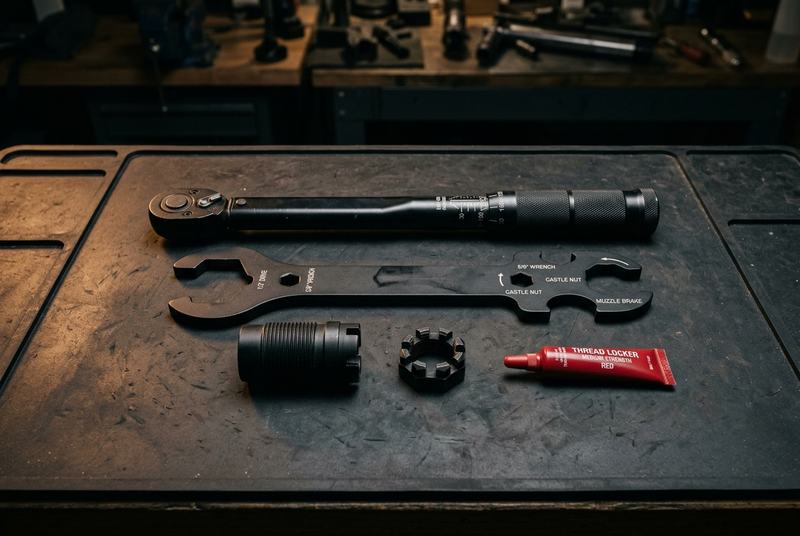
Big parts are torqued in foot-pounds (ft-lb) and small screws in inch-pounds (in-lb). One foot-pound is 12 inch-pounds, so mixing them up is how gas key screws snap and castle nuts end up loose. Most builders need two wrenches: a 3/8-inch drive in foot-pounds for the barrel nut and castle nut, and a small inch-pound driver for screws.
Tips that matter more than the number
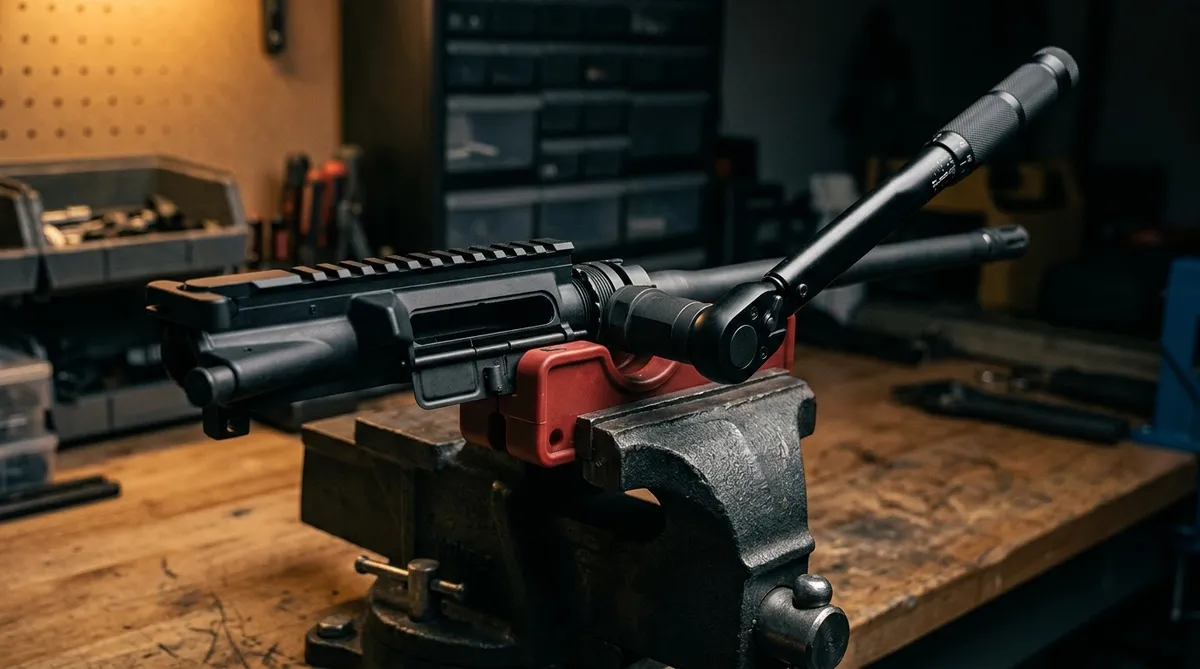
- Barrel nut: clean the threads and use a light coat of grease, never thread locker. Support the upper in a proper vise block, not the receiver walls.
- Castle nut: once torqued, stake the end plate into the nut so it can't back out.
- Muzzle device: a crush washer is single use; tighten until the ports face the way the maker shows, within the torque range.
- Set screws and small screws: degrease the threads before thread locker, and torque them in a cross pattern where there are several.
Planning a build? The AR-15 builder checks that your parts fit, and our Ultimate AR-15 Build Guide walks through assembly step by step. For muzzle threads, see the AR-15 thread size chart.
Staking the castle nut? See AR-15 end plates and castle nuts, step by step.
Frequently asked questions
What torque does an AR-15 barrel nut need?
A mil-spec barrel nut takes at least 30 ft-lb and up to 80 ft-lb, enough to line up a slot with the gas tube hole. Free-float handguards with their own nut use the maker's value.
Do I need a torque wrench to build an AR-15?
For the barrel nut and castle nut, yes: guessing leads to loose barrels or damaged receivers. An inch-pound driver helps for set screws and optic mounts.
Should I use thread locker on the barrel nut?
No. Use a light coat of grease on a mil-spec barrel nut. Thread locker belongs on small screws such as gas block set screws, as the maker directs.
What torque for an AR-15 castle nut?
About 35 to 40 ft-lb (the Army manual gives 38 to 42 ft-lb for the carbine), then stake it.
What torque for a flash hider or muzzle brake?
15 to 20 ft-lb on a crush washer, timed so the ports face the right way. Brakes with shims or peel washers use the maker's instructions.
Sources: US Army TM 9-1005-319-23&P values where it gives one, and common manufacturer instructions. Your parts' own instructions always win.