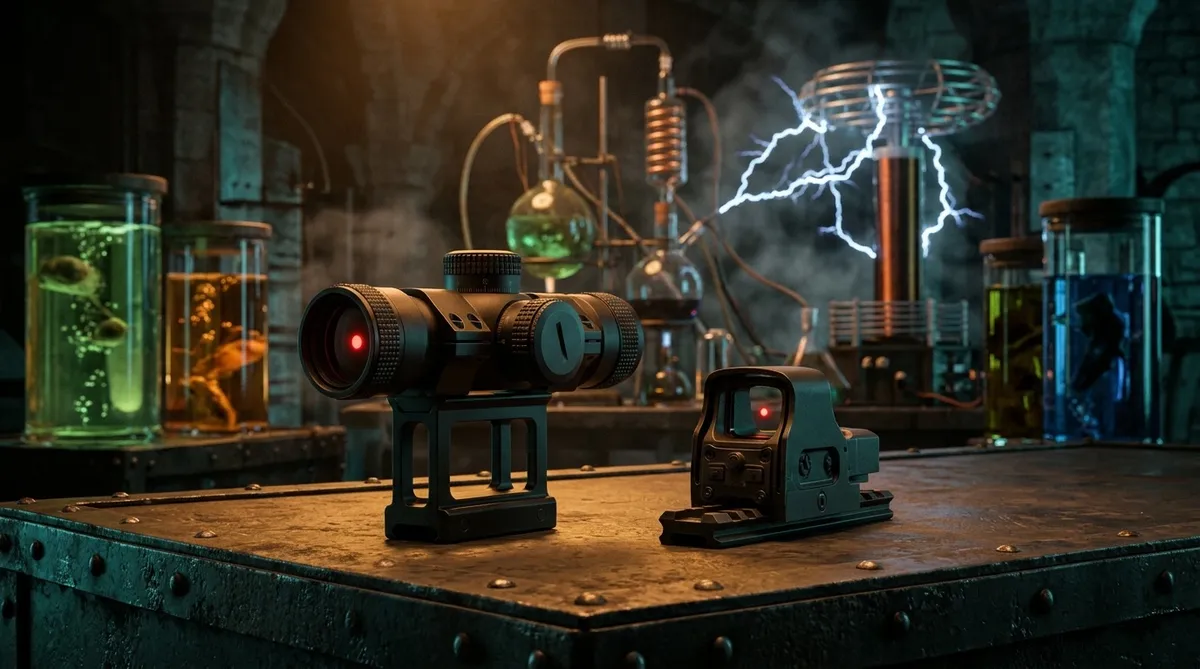
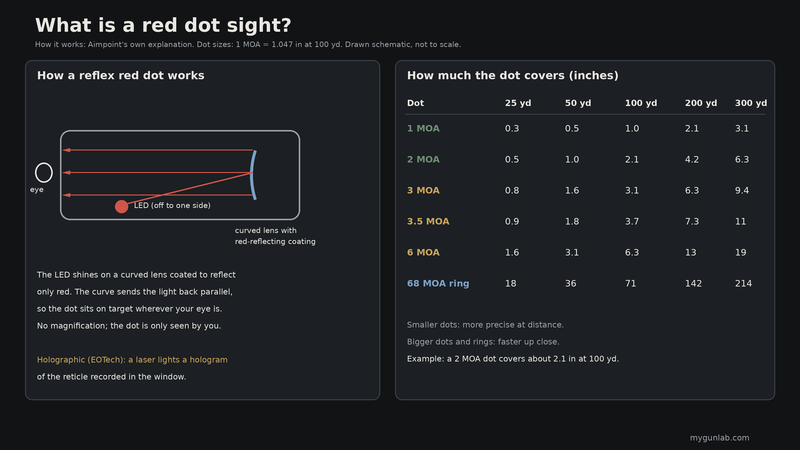
Short answer: a red dot sight is a non-magnified optic that shows you a lit aiming dot over the target. Inside, an LED shines onto a curved lens coated to reflect only red light, and the lens sends that light back to your eye parallel to the sight's axis, so the dot stays on target even if your head isn't perfectly centered. Dot size is given in MOA: a 2 MOA dot covers about 2.1 inches at 100 yards. Zero it by shooting a group, then turning the windage and elevation turrets until the group moves to the dot.
How it works, and how big the dot is
How a red dot works
Aimpoint explains it this way: an LED inside the sight emits red light onto a curved lens with a coating that reflects only a narrow band of red. Because of the curve, the reflected light comes back parallel, and that is the dot you see. The dot is not projected onto the target; only you can see it, and there is no magnification.
Types of red dot sights
- Tube sights (Aimpoint CompM5, Sig Romeo5) enclose the lens in a short tube.
- Open reflex sights (Holosun HS510C, Trijicon MRO) have a larger, more open window.
- Holographic sights (EOTech) use a laser to light a hologram of the reticle recorded in the window; they are known for shorter battery life than LED sights.
- Prism scopes and LPVOs add magnification; see red dot vs LPVO vs prism.
What MOA means
MOA (minute of angle) is 1/60 of a degree, about 1.047 inches at 100 yards. A 2 MOA dot covers about 2.1 inches at 100 yards and 4.2 at 200. Smaller dots cover less of a distant target; bigger dots and rings, such as EOTech's 68 MOA ring, are quicker to pick up up close. Many sights, like Holosun's circle-dot models, let you switch between a dot and a ring.
How to zero a red dot
- Mount it solidly and set a comfortable brightness.
- Pick a zero distance; 25, 50 and 100 yards are common.
- Fire a 3 to 5 shot group at the center of the target.
- Measure how far the group is from the aiming point and turn the windage and elevation turrets; each click moves impact by the amount marked on the sight (for example 1/2 MOA, about 0.5 inch at 100 yards).
- Fire another group to confirm.
For backup irons under the dot, see flip-up backup sights; for picks, the best AR-15 red dot sights.
Red dot sights by type, with today's prices
Lowest price across the stores we track:
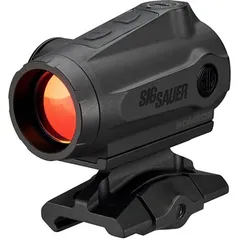
Sig Sauer Romeo5 Gen II 2 MOA
Pros
- Compact tube sight, 2 MOA dot
Cons
- This listing is the green-dot model
Tube, budget
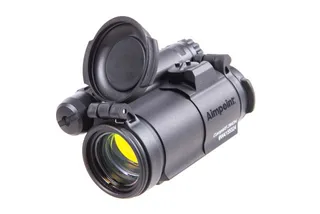
Aimpoint CompM5 2 MOA
Pros
- Aimpoint tube sight, 2 MOA dot
Cons
- Mount sold separately
Tube, duty
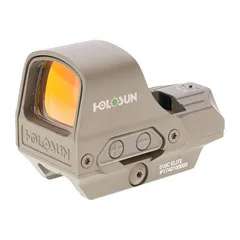
Holosun HS510C 2 MOA circle dot
Pros
- Open reflex with a 2 MOA dot and circle
Cons
- This listing is FDE, green
Open reflex
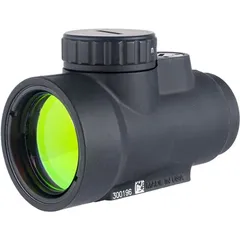
Trijicon MRO SD 2 MOA
Pros
- Open reflex, 1x25, 2 MOA dot
Cons
- No mount on this listing
Open reflex
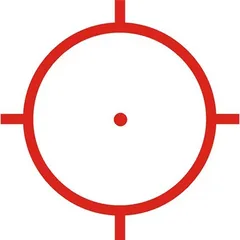
EOTech XPS2-0 holographic
Pros
- 68 MOA ring and 1 MOA dot
- Holographic reticle
Cons
- Shorter battery life than LED sights
Holographic
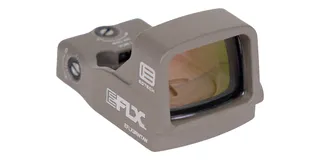
EOTech EFLX 3 MOA
Pros
- 3 MOA red dot, DPP footprint
Cons
- This listing is tan
Mini reflex
Compare all sights and optics.
Frequently asked questions
What is a red dot sight?
A non-magnified sight that shows a lit aiming dot; an LED reflects off a coated lens back to your eye.
What does 2 MOA mean on a red dot?
The dot covers 2 minutes of angle: about 2.1 inches at 100 yards.
Is a red dot a scope?
Not usually: a red dot has no magnification. Add a flip-to-side magnifier if you want some.
What is the difference between a red dot and a holographic sight?
A red dot reflects an LED off a coated lens; a holographic sight uses a laser to light a hologram of the reticle in the window.
What distance should I zero a red dot?
25, 50 and 100 yards are all common; pick the one that suits your use and confirm at the distances you shoot.
Do red dots work for people with astigmatism?
The dot can look smeared to some people with astigmatism; many try a prism scope with an etched reticle instead.